
Coordinating Crowd Safety at a One-Million-Person Parade
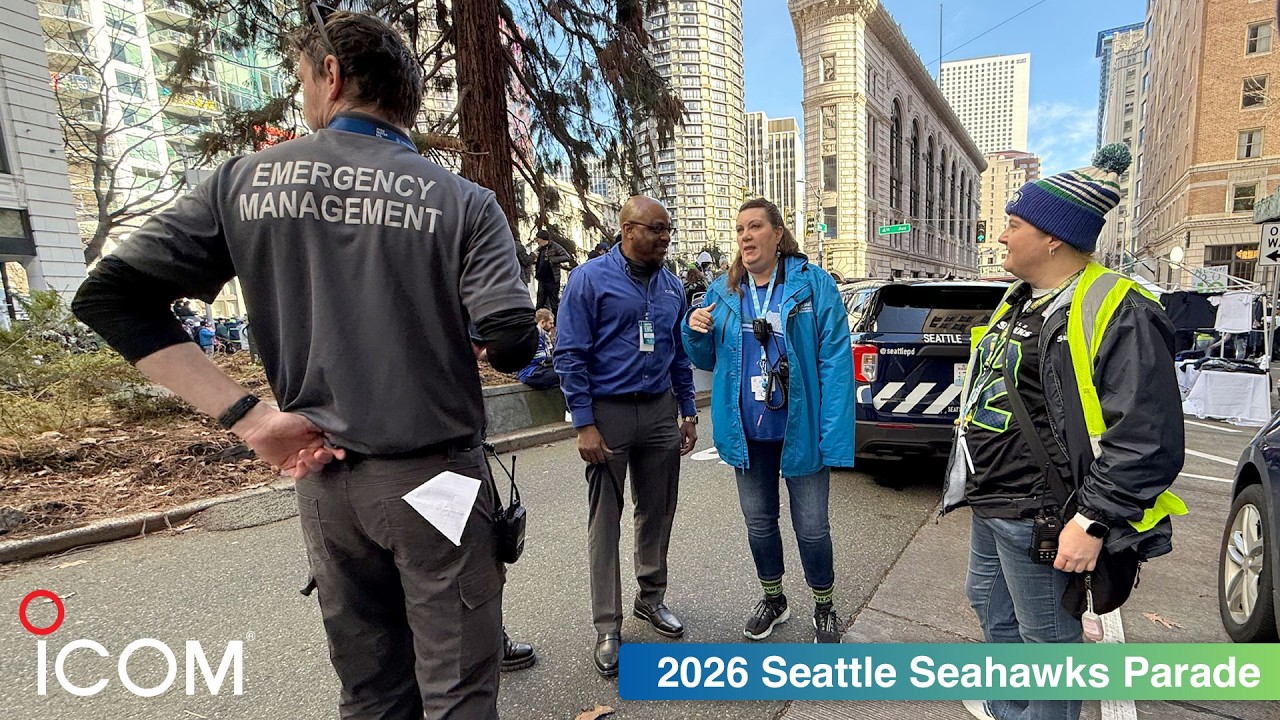
When the Seattle Seahawks won Super Bowl LX, nearly one million people flooded the streets to celebrate. The championship parade stretched roughly two miles through downtown, creating one of the largest public gatherings in the region’s history. Behind the celebration, maintaining communication across the crowd was critical. The Emergency Management Group – Washington was responsible for coordinating incident response and crowd safety.
The Challenge: Cellular Congestion and Urban Infrastructure
The parade was expected to draw between 750,000 and 1 million people along a roughly 2-mile route through downtown Seattle. For the Emergency Management Group – Washington, the mission was clear: maintain constant communication between the dispatch and deployed field teams to support crowd safety and incident response throughout the event.
Major cellular providers reinforced their infrastructure in anticipation of the surge in demand, but network congestion was inevitable with hundreds of thousands of attendees flooding the streets. Downtown Seattle’s high-rise environment adds another layer of complexity. Wide-area radio coverage in urban settings often requires careful system planning and, in many cases, temporary repeater infrastructure to ensure consistent performance over extended distances.
For a fast-moving, large-scale public event, time and logistics can make that approach impractical. Dispatch and field teams needed a solution that could be quickly deployed, support wide-area coverage, and remain reliable without requiring complex infrastructure setup.
The Solution: Infrastructure-Free Hybrid Cellular Radios
Over 50 of Icom’s IP740D hybrid radios were deployed to provide a cellular and UHF communications solution across the parade route. These devices operate without traditional repeater-based radio infrastructure, allowing teams to deploy quickly without extensive system planning.
Cellular connection served as the primary form of communication. The off-site dispatch team was able to monitor field team conversations with only brief, minor interruptions in cellular service. Even under extreme cellular congestion, the UHF backup was never required, demonstrating the strength of Icom’s hybrid network design.
“Right now, cell phones aren't working. You're lucky to get a text through, but that's [IP740D] going through regardless. Radios are great because we're able to communicate with not just each other, but other organizations as well.” — Scott, Emergency Management Group – Washington.
What Makes the IP740D Stand Out?
The IP740D combines cellular connectivity with UHF redundancy, offering two independent communication paths in a single device.
Key Advantages
Hybrid flexibility guarantees that users stay connected across sprawling urban environments and under heavy network strain.
| Feature | Benefit |
|---|---|
| Hybrid Cellular + UHF | Maintain primary wide-area cellular coverage with true RF backup when needed. |
| Talkgroups | Separate or merge teams while maintaining cross-group communication. |
| Over-the-Air Programming | Update devices remotely with automatic configuration upon restart. |
| Simultaneous TalkListen™ | Enable natural, telephone-style conversations without traditional PTT delays. |
| System Compatibility | Works with IP501M, IP740D series, and IP500APP for flexible deployments. |
For more information about the IP740D, click here.
Conclusion
The Seahawks’ Super Bowl Championship parade wasn’t just a celebration; it was a real-world stress test of modern communication systems. In an environment where cellular congestion was expected, and RF performance can be compromised by urban infrastructure, the IP740D delivered flexible performance without complex requirements.
For organizations responsible for crowd safety, emergency response, or large-scale event coordination, redundancy isn’t optional; it's essential. Hybrid communication ensures that when one pathway is strained, another is ready to take over.
